
Illustrative image
Skin Rejuvenation
Chemical Peels
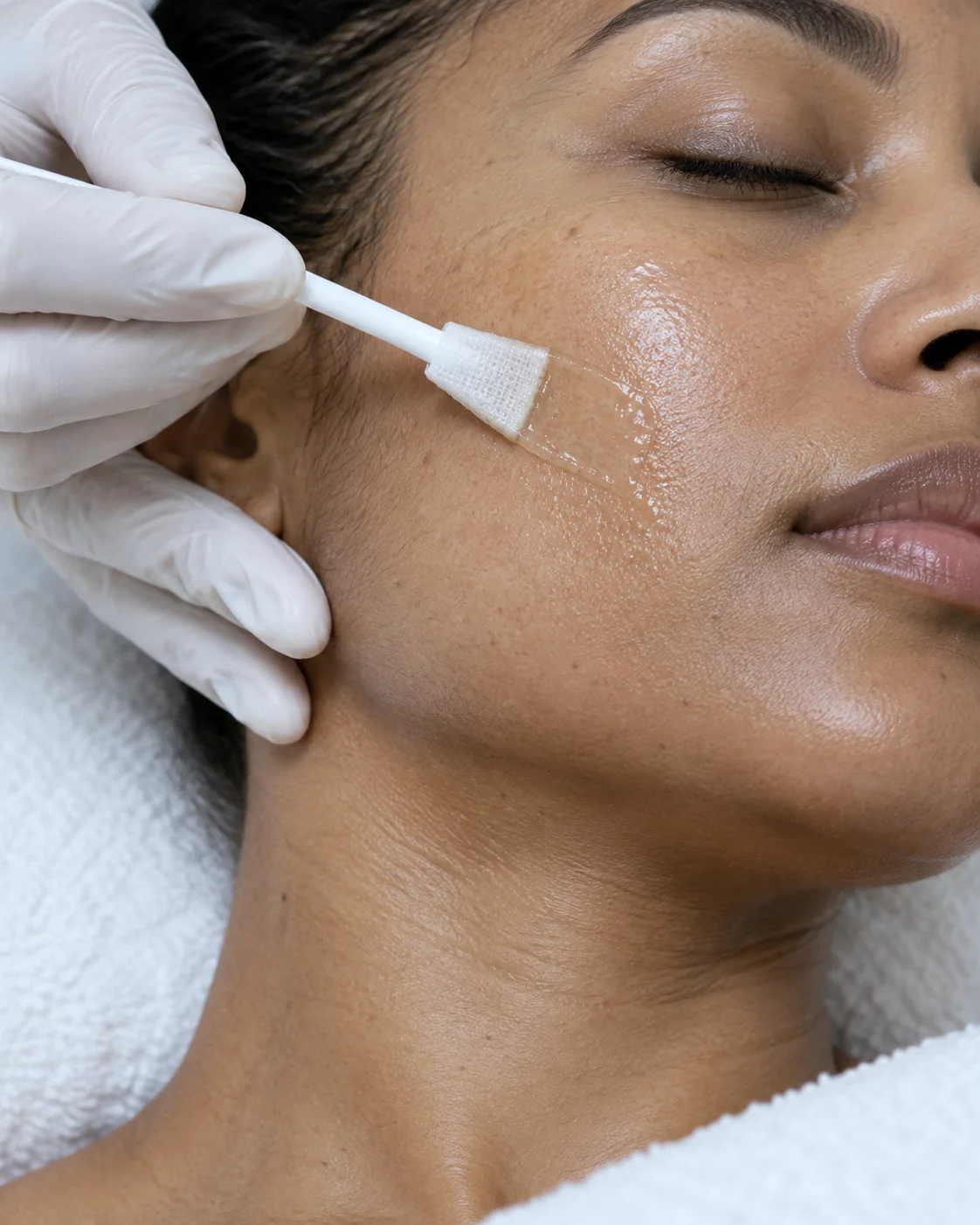
A chemical peel uses a solution applied to the skin to remove its outer layers, allowing fresher skin to form beneath. Peels are commonly discussed for uneven tone, texture, fine lines and some acne concerns.
- Price
- From $175per session
- Category
- Skin Rejuvenation
- Recovery
- Varies with peel depth
How It Works
Understandingchemical peels.
A chemical peel is a controlled exfoliation: a solution is applied to the skin, the treated layers loosen and shed, and new skin forms in their place.
Peels are grouped by how deeply they work. A light peel affects only the outermost layer and is often done as a series; a medium peel reaches into the layer below; a deep peel goes further still. Generally, the deeper the peel, the more noticeable the change — and the longer the recovery and the greater the risk.
The formulation and depth are chosen for the individual, so suitability, recovery and what you can expect all depend on which peel is recommended. The options available here are confirmed at your consultation.
A chemical peel is different from microneedling. A peel works chemically, removing layers from the skin’s surface; microneedling works mechanically, using very fine needles to make tiny punctures that prompt the skin’s repair response. They can suit different concerns, and your provider can explain which is more appropriate for you.
Commonly discussed at consultation
- Your skin concerns and what you hope to change
- Your skin tone and any history of pigment changes or scarring
- Your current skincare, including retinoids and acne treatments
- Medications, isotretinoin use, cold sores and previous procedures
Concerns & Suitability
What chemical peels are used for.
Depending on the peel, chemical peels are used for concerns including:
- Fine lines and wrinkles
- Uneven skin tone and age spots
- Rough, sun-damaged skin
- Acne and some acne scarring
Suitability is individual
Light peels can be used across skin types, but darker skin tones carry a higher risk of pigment changes, so the choice of peel and the provider’s experience with your skin type matter. A history of abnormal scarring, isotretinoin use, cold sores, skin-sensitising medications, or being unable to avoid the sun while healing can also affect whether a peel is right for you.
Your Appointment
What to expect.
-
Consultation and assessment
Your provider examines your skin, asks about your goals and history, and explains whether a chemical peel suits you — and, if not, what else may be worth discussing.
- Share all medications, supplements and any isotretinoin use
- Mention cold sores, easy scarring and previous procedures
-
Your treatment plan
If a peel is appropriate, your provider recommends a peel type and depth for your skin and explains what it is expected to do, the side effects, the likely recovery and the cost before you proceed.
- Ask about the provider’s experience with your skin type
- Ask whether a single peel or a series is recommended
-
Aftercare guidance
Redness, peeling and sensitivity are expected, and how long they last depends on the depth of the peel. Your provider explains how to care for your skin while it heals and which signs to report.
- Protect treated skin from the sun
- Avoid picking or scratching peeling skin
General information only. Your provider will give instructions specific to you.
Pricing
Chemical peel pricing.
The cost depends on the peel recommended for you and whether a single treatment or a series is advised. Your provider confirms the final cost with you before you proceed.
Chemical Peel
From$175
per session
- Starting price per session
- Peel type and number of sessions depend on your treatment plan
Sample menu and pricing for demonstration only.
Chemical Peel FAQ
Questions aboutchemical peels.
General information drawn from published guidance. Your provider confirms what applies to your skin.
View All FAQsPeels range from light to deep and use different solutions. Your provider considers your concerns, skin type and tone, history and how much recovery time you can allow, then recommends a peel — or suggests that a different treatment may suit you better.
It depends on the depth. After a light peel, redness and flaking are usually short-lived; a medium peel can bring swelling, blistering and crusting and needs more time; a deep peel involves a significant recovery. Your provider explains what to expect from the peel recommended for you.
Light peels can be used across skin types, but darker skin tones have a higher risk of pigment changes — including, in some cases, permanent darkening or lightening. Choosing an appropriate peel and a provider experienced with your skin type is especially important.
Possible side effects include prolonged redness, darkening or lightening of the skin, infection, cold sore flare-ups and, rarely, scarring. Risks generally increase with peel depth, and scratching treated skin or sun exposure while healing raises them further.
Light peels are often done as a series, spaced weeks apart, and medium peels may be repeated. A deep peel is generally done only once. The right schedule depends on the peel and your skin, and your provider will advise.
A chemical peel uses a solution to remove layers from the skin’s surface. Microneedling uses very fine needles to make tiny punctures that prompt the skin’s repair response. They can address some of the same concerns in different ways — see our Microneedling page or ask at your consultation.
Related Treatments
You may also explore
Take the Next Step
Talk throughchemical peels.
Book a consultation to discuss your skin, your history, and whether a chemical peel — and which kind — is suitable for you.