Illustrative image
Medical Facials
Dermaplaning Facial
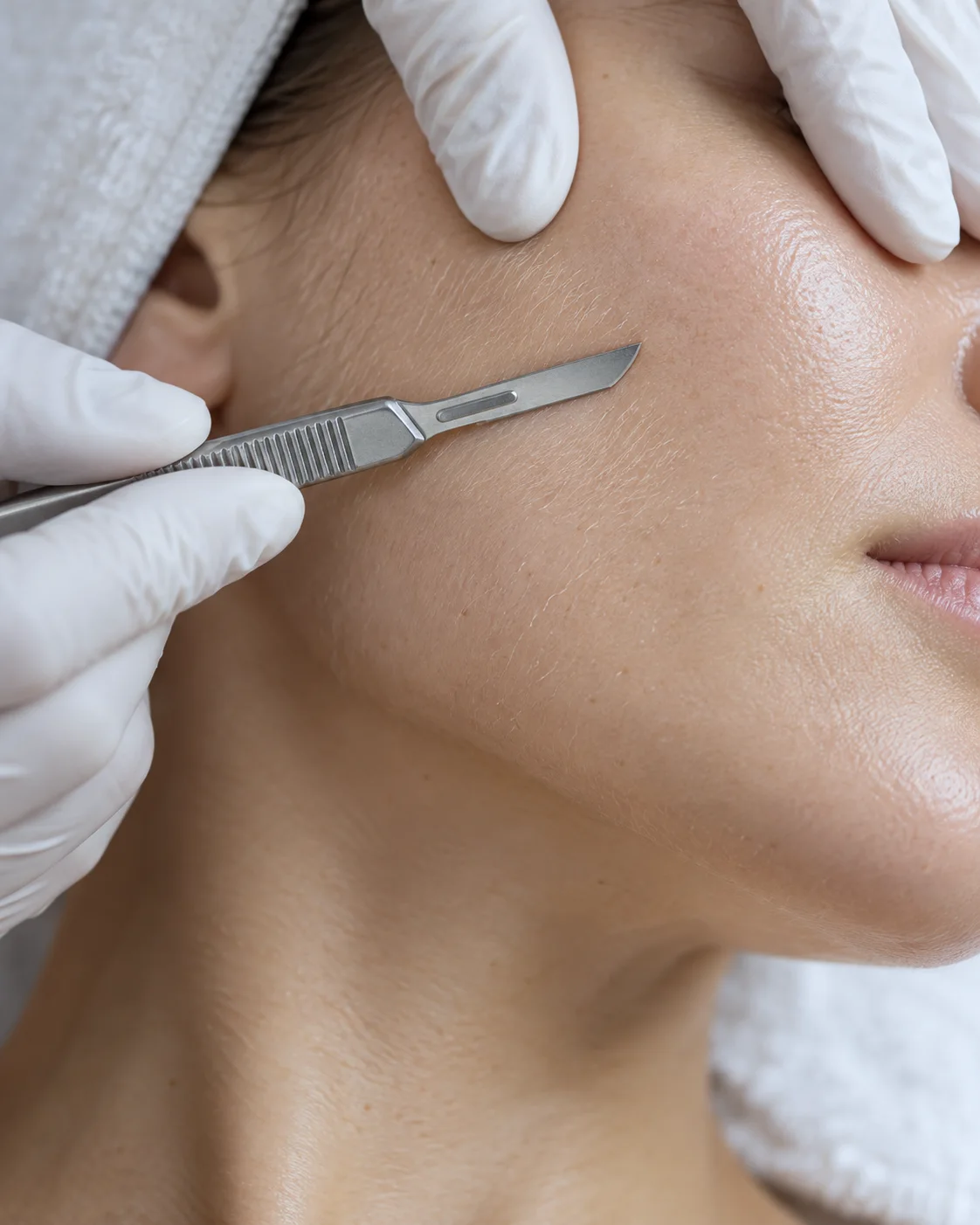
Dermaplaning uses a small, fine blade to gently remove dead skin cells and the soft facial hair known as peach fuzz, leaving skin feeling smoother. Your provider will talk with you first about whether it suits your skin.
- Price
- $185per session
- Category
- Medical Facials
How It Works
Understandingdermaplaning.
Dermaplaning is an exfoliating treatment: a provider passes a small, sterile blade lightly over the skin to remove dead skin cells and fine vellus hair from the surface.
Removing that surface layer can leave skin feeling softer and looking a little smoother and brighter. The effect is temporary — hair grows back, and skin continues to renew itself — so some people choose to repeat it over time.
Dermaplaning is one specific technique. A signature facial is a broader skincare appointment tailored to your skin, and a chemical peel uses a solution, rather than a blade, to remove outer layers of skin. Any facial steps offered alongside dermaplaning here are explained at your consultation.
Commonly discussed at consultation
- What you would like to change about how your skin looks or feels
- Any acne breakouts, eczema, cold sores or other active skin issues
- Sensitivity and the skincare products you use
- Recent treatments, and how your skin has responded to exfoliation before
Concerns & Suitability
What dermaplaning is used for.
People often ask about dermaplaning when they would like:
- Skin that looks dull to feel smoother and brighter
- Less visible peach fuzz on the face
- A gentle physical exfoliation
- A smoother surface before applying skincare or makeup
Suitability is individual
Dermaplaning lightly disrupts the skin barrier, so skin may feel irritated for a short time afterwards, and a nick can lead to infection. It is generally avoided during an acne breakout — where it can aggravate existing acne or contribute to more — or with eczema, cold sores, rashes or other active skin issues. Sensitive skin, the products you use and recent treatments all affect whether it suits you, so your provider assesses your skin first.
Your Appointment
What to expect.
-
Consultation and skin assessment
Your provider looks at your skin, asks about breakouts, sensitivity, skin conditions, the products you use and recent treatments, and explains whether dermaplaning is likely to suit you.
- Mention any active acne, eczema or cold sores
- Share retinoids or other active products you use
-
An agreed treatment plan
If dermaplaning is appropriate, your provider explains what the treatment involves, any other steps in your facial, the possible side effects and the cost before you begin.
- Ask how often treatment may be appropriate for your skin
-
Personalized aftercare guidance
Your provider explains how to care for your skin afterwards, including sun protection, and what to look out for.
- Wear sunscreen afterwards
- Report any cuts, signs of infection or persistent irritation
General information only. Your provider will give instructions specific to you.
Pricing
Dermaplaning facial pricing.
The dermaplaning facial is priced per session. Your provider confirms whether it suits your skin, and the cost, before you begin.
Dermaplaning Facial
$185
per session
Sample menu and pricing for demonstration only.
Dermaplaning FAQ
Questions aboutdermaplaning.
General information drawn from published guidance, alongside how the facial works here. Your provider confirms what applies to you.
View All FAQsShaving removes hair. Dermaplaning uses a small, fine blade to remove both fine vellus hair and dead skin cells from the surface, so it is also a form of physical exfoliation. Other exfoliating treatments work differently — a chemical peel, for example, uses a solution to remove outer layers of skin. Your provider can explain which approach suits your skin.
No. Trimming hair at the surface has no effect on how it grows. Regrowth can feel a little coarser at first because each hair has a blunt tip, but that is temporary. The hair does grow back, so the effect does not last.
It depends on your skin. Dermaplaning is generally avoided during an acne breakout, an eczema flare-up, cold sores, rashes or other active skin issues. Sensitive skin, the products you use and recent treatments also matter, so your provider assesses your skin before recommending it.
Dermaplaning lightly disrupts the skin barrier, so temporary irritation or redness is possible. A nick can be painful and lead to infection, and treating skin during a breakout can aggravate acne. Wear sunscreen afterwards, and tell your provider about any reaction.
There is no single schedule. Results are temporary, so some people repeat treatment, but your skin needs time to recover in between. Your provider suggests an interval based on your skin and how it responds.
Dermaplaning is the core of the treatment. Any other facial steps are tailored to your skin and explained at your consultation, before you begin.
Related Treatments
You may also explore
Take the Next Step
Talk throughdermaplaning.
Book a consultation to discuss your skin, what you would like to change, and whether a dermaplaning facial is right for you.